Collective worlding - artistic and pedagogical practices as allies in moving through colonial modernity.
“We need to make kin sym-chthonically, sym-poetically. Who and whatever we are, we need to make-with—become-with, compose-with—the earth-bound. We, human people everywhere, must address intense, systemic urgencies” (Haraway, 2015)
Collective Worlding is a transdisciplinary research project exploring how collective artistic and pedagogical practices can serve as pathways toward healing, connection, and transformation in times of ecological, social, and relational crisis. The project unfolds at the intersection of art, education, and decolonial inquiry, drawing on feminist, queer, and new materialist perspectives to imagine and enact worlds beyond colonial modernity — worlds rooted in interdependence, care, and multispecies coexistence.
Emerging from my long-term work with new visions, an art–education–research collective I co-founded with Liene Jurgelane in 2019, this project is deeply grounded in community practice. The community of alumni of TAIGA program, now about 120 women and queer folks, functions as a living laboratory for exploring collective creation, learning, and care. Our work grows from a shared commitment to cultivating holistic, feminist, and decolonial forms of being and doing.
Research Focus
My doctoral research, situated within the field of art for psychosocial improvement and in therapeutic contexts, investigates connection and reconnection as essential, entangled elements of healing coloniality. Through experiential and participatory inquiry, I aim to develop a highly adaptive holistic model at the intersection of arts and learning that invites transformation at both personal and collective levels.
Drawing from the works of Donna Haraway, Vanessa Machado de Oliveira, Karen Barad, Natasha Myers, and Lorena Cabnal, among others, this project engages with key concepts such as modernity/coloniality, worlding, somatics, and posthumanism. It asks how we can “become with” the world: how art and collective learning can help us unlearn the inherited habits of separation and cultivate life-sustaining forms of relation.
Becoming TAIGA
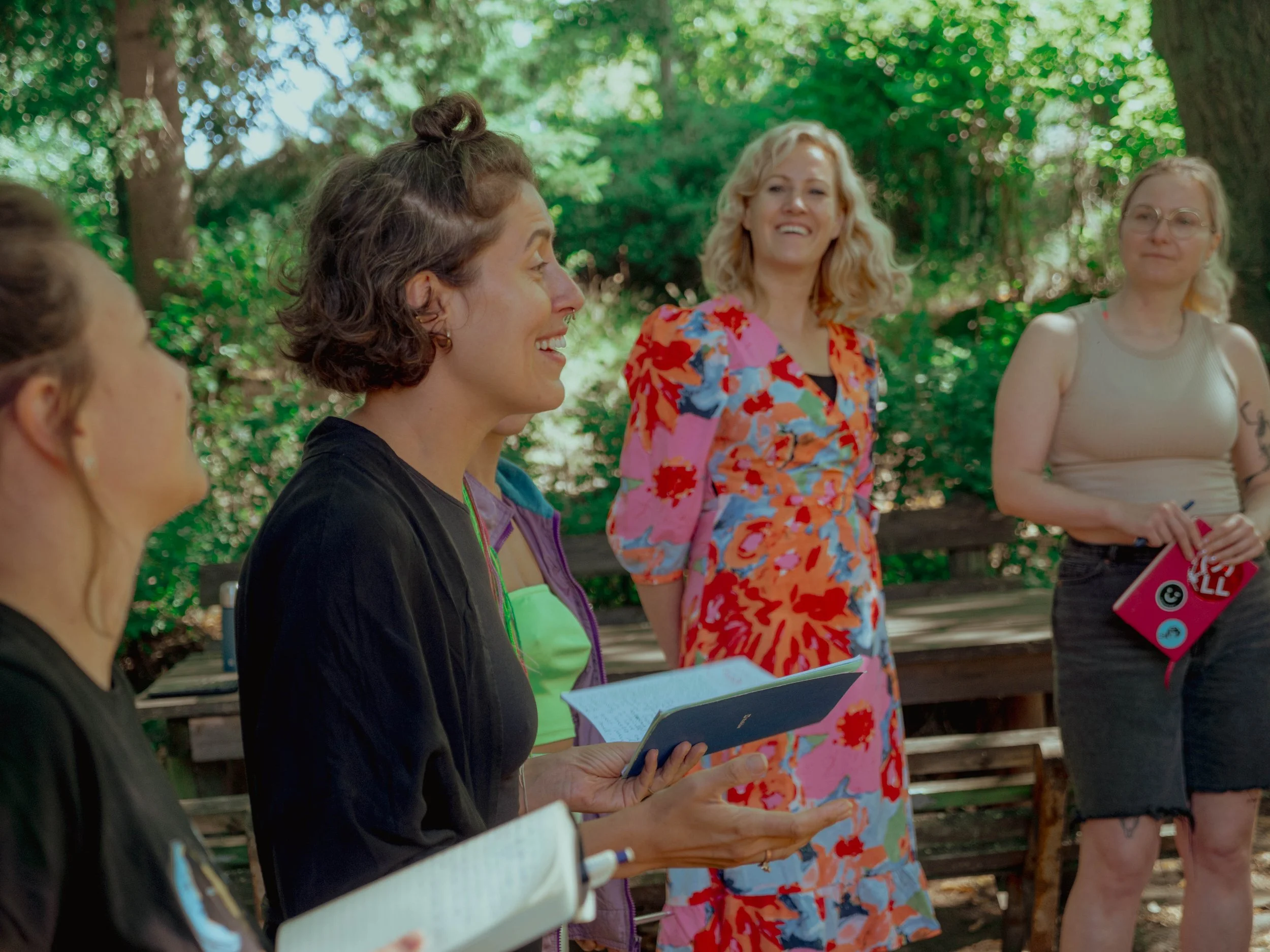
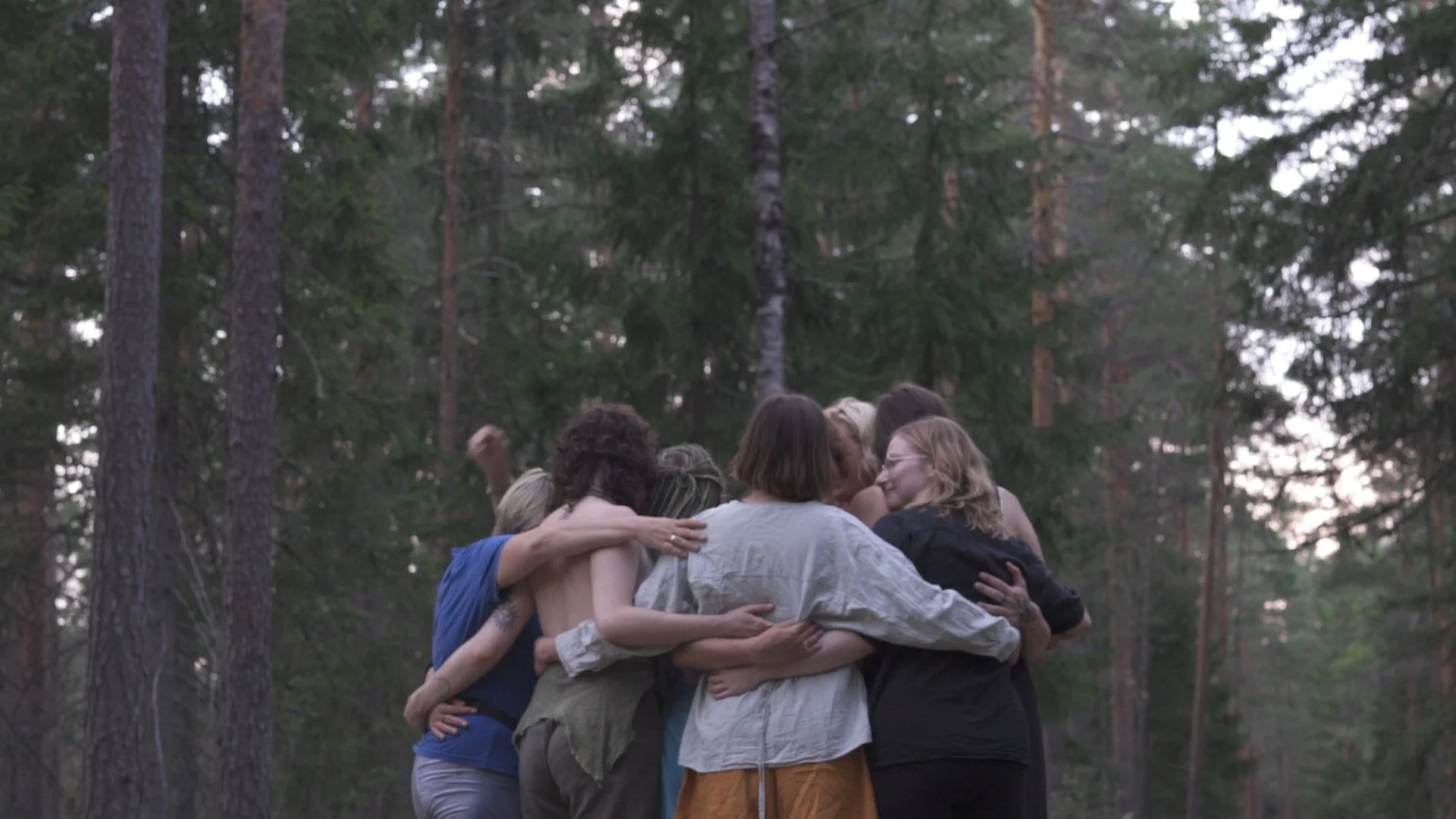
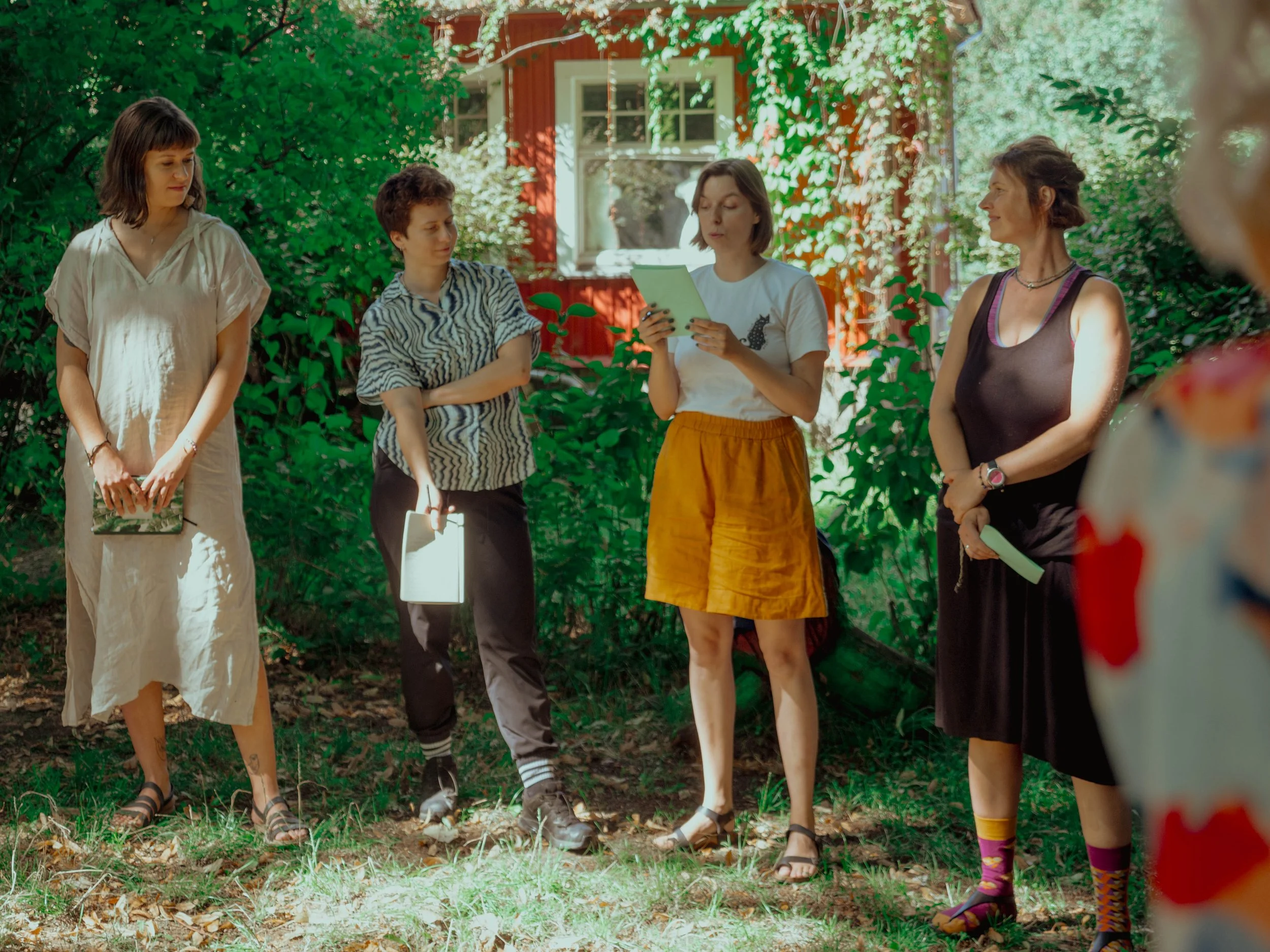
I do the fieldwork during Becoming TAIGA gatherings, a yearly get-together of the TAIGA community. Co-created with the new visions e.V. collective and supported by the Echoing Green Foundation, the gathering brought together artists, educators, and activists from Eastern Europe for seven days of collective exploration.
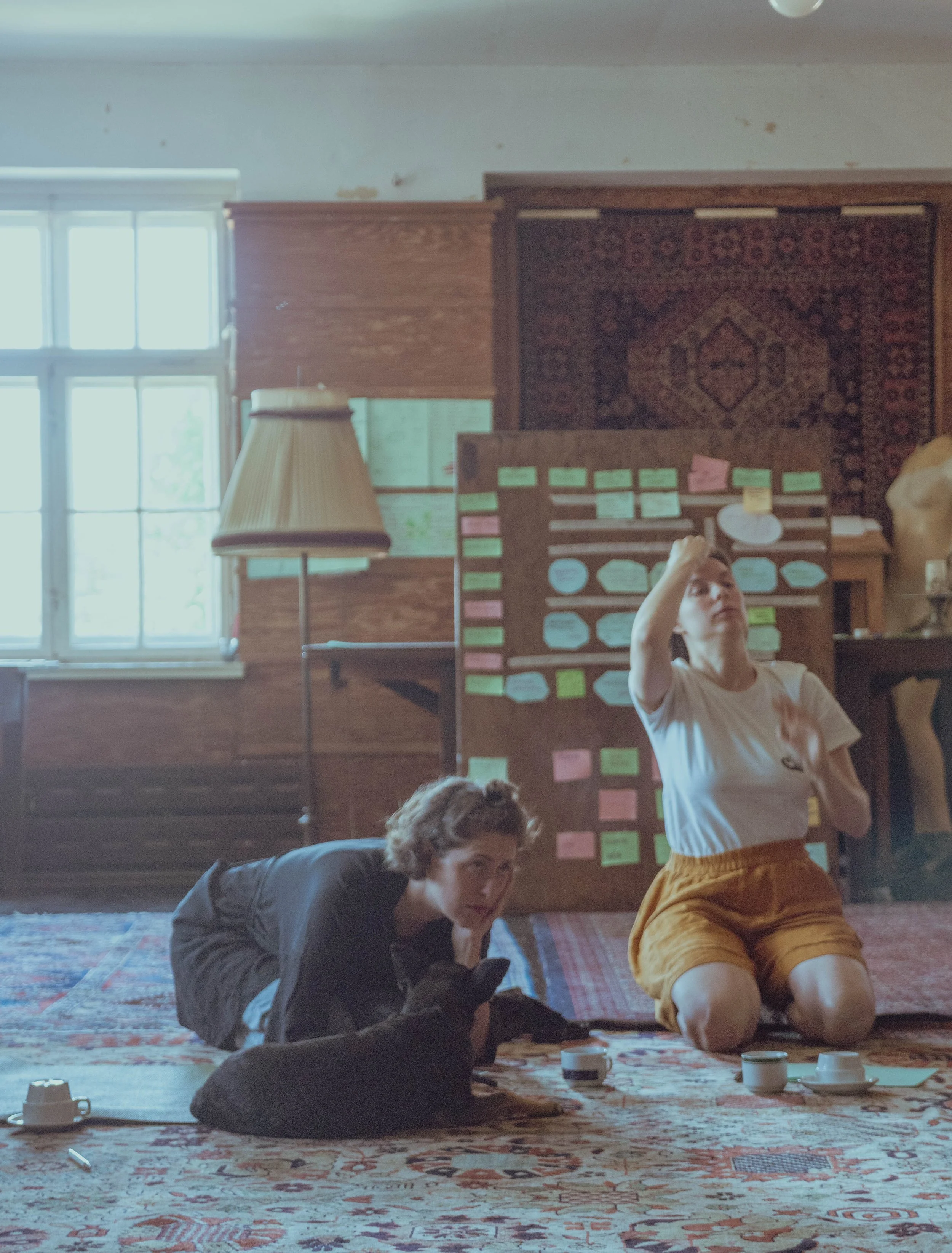
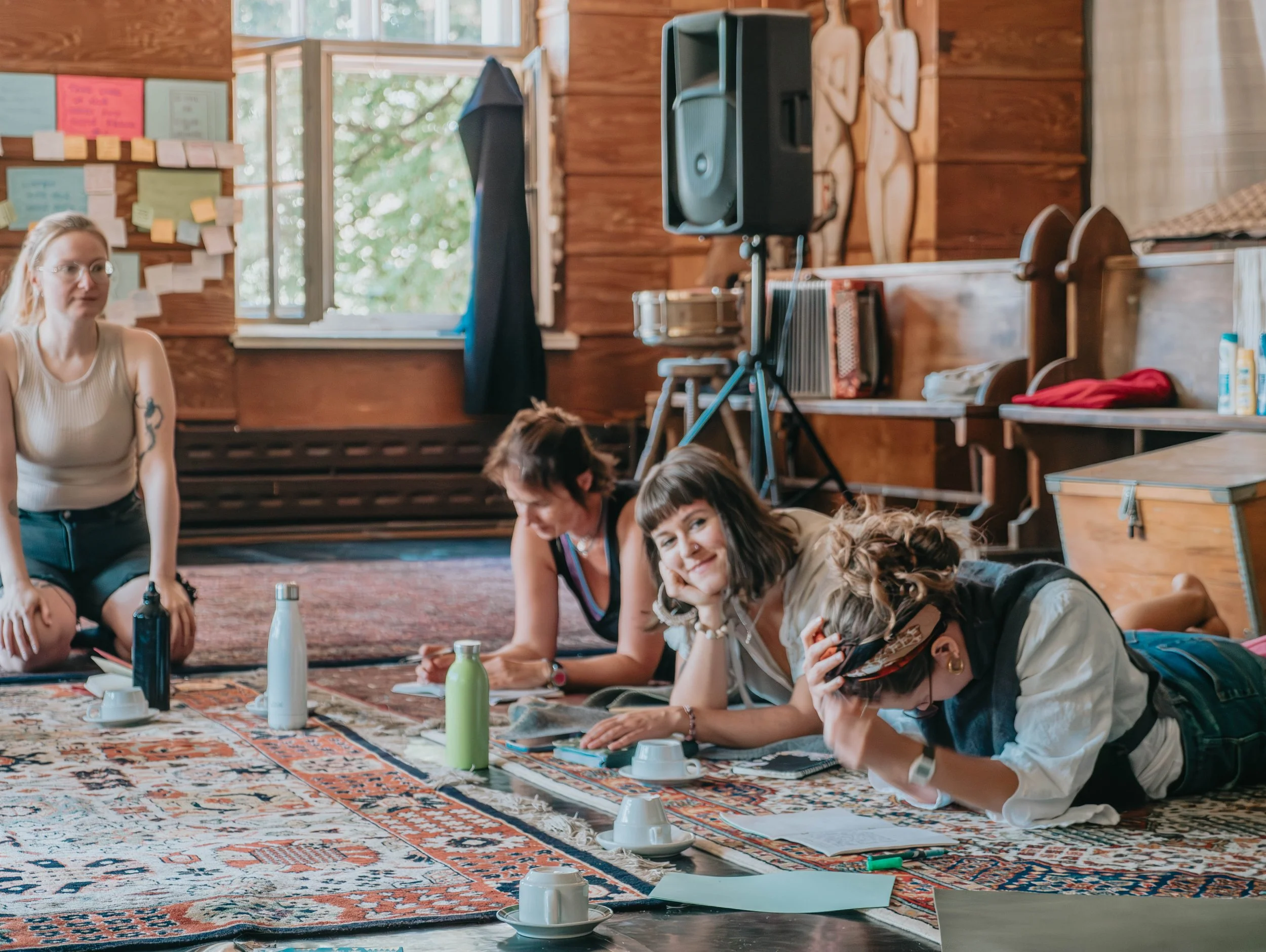
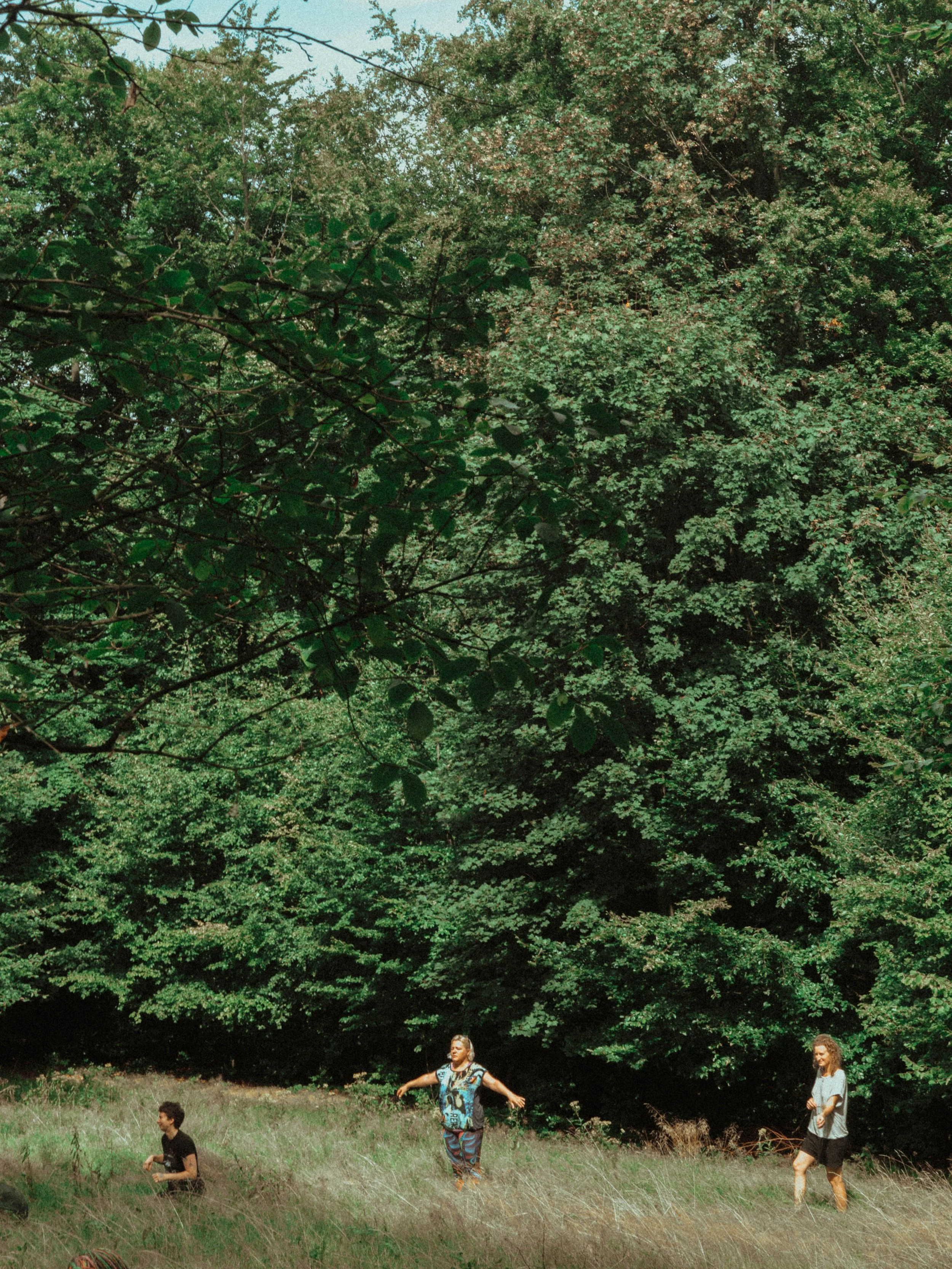
Workshops such as Screaming and Grief Meditation, Pleasure Time & Authentic Movement, Dreaming Session, and Multispecies Dreaming invited participants to inhabit somatic, affective, and multispecies forms of connection. These experiences were documented through interviews, field journals, and audiovisual materials, forming the basis of the project’s first cycle of analysis.
Through these practices, the forest — the taiga itself — emerges not merely as setting, but as collaborator and epistemic partner: a teacher of interdependence, adaptation, and ecological attunement.
Context and Purpose
We live amidst overlapping crises: ecological collapse, systemic violence, racial and gender injustice, that stem from centuries of colonial domination, extractive capitalism, and the illusion of human superiority. This project responds to the urgent need for new relational and epistemic frameworks that can help us face these realities with humility, creativity, and care.
By integrating experiential learning, somatic awareness, and artistic co-creation, Collective Worlding explores how art can serve as a form of world-making and collective healing. It asks:
How can artistic and pedagogical practices help us decolonize our ways of knowing and being?
How can collective creativity repair our relationships with land, body, and community?
What can we learn from the more-than-human world about interdependence and resilience?
While inspired by global decolonial and posthumanist scholarship, this research is grounded in the Eastern European context, where coloniality manifests through complex entanglements of russian imperialism, Soviet domination, and Western liberalism. By engaging thinkers such as Linda Lapina, Dace Dzenovska, Ewa Majewska, Ieva Astahovska, Margaret Tali, and Alla Myzelev, the project seeks to contribute to the emerging field of Eastern European decolonial thought, situating questions of liberation, identity, and belonging within local histories and ecosystems. This regional grounding challenges the Western-centric orientation of much decolonial theory and asks how decoloniality might unfold in a semi-peripheral context marked by overlapping empires and silenced stories.
Methodology
The research employs participatory, embodied, and relational methodologies, including Feminist Participatory Action Research, autoethnography, and arts-based inquiry. It emphasizes process over product, collectivity over individual authorship, and learning as a deeply affective, somatic, and ethical practice.
Over time, the scope of pedagogical and artistic practices has been refined to focus on sensuous, speculative, and collective engagements — workshops and spaces where art acts as a catalyst for transformation rather than representation. These include practices of movement, dreaming, ritual, and collective storytelling — all forms of postartistic practice that blur boundaries between art, pedagogy, and world-making.
Its fieldwork centers on Becoming TAIGA, a seven-day gathering of artists and activists from Eastern Europe who are part of the TAIGA (Un)Learning and Empowerment Program, co-created within new visions e.V. with support from the Echoing Green Foundation.
Through these collective spaces, the project studies how shared artistic and learning experiences foster connection, transformation, and decolonial imagination.

Emerging Themes and Insights
Collectivity and interconnectedness
Embodiment and somatic knowing
Multispecies entanglements
Safety, tenderness, and grief
Dreams, imagination, and speculation
Decolonial practices and experimentation
These overlapping strands form an ecology of relations, where learning, healing, and creativity are inseparable processes of reweaving the fabric of life.
Current Writing and Reflections
The project’s first article (currently in progress) explores learning interdependence in a hyperindividualist world, using the Becoming TAIGA experience to examine how somatic collectivity can recalibrate our relational sensibilities amid neoliberal, capitalist, and colonial structures. It argues that collective embodied experiences can act as phenomena of re-learning — reminding us of our interdependence with each other and the more-than-human world.
Speculative and imaginative practices are emerging as key tools for this inquiry, not as escapism, but as grounded, ecological methods of imagining with. Writing, dreaming, and collective storytelling become acts of relational listening: ways of learning from the more-than-human world, and from the stories that move through us.
Broader Vision
At its heart, Collective Worlding is a call to reimagine our ways of being in the world through art, care, and community. It envisions research not as extraction or discovery, but as world-making, an act of co-creation rooted in respect, reciprocity, and reverence. It is a practice of re-membering, of returning to the entangled nature of existence and nurturing worlds that are livable, just, and tender. By weaving together art, activism, education, and embodied practice, this work seeks to nurture livable worlds where interdependence, justice, and tenderness can guide how we learn, create, and exist together.
It is both a research project and an invitation: to unlearn the habits of separation, to imagine otherwise, and to make worlds together.